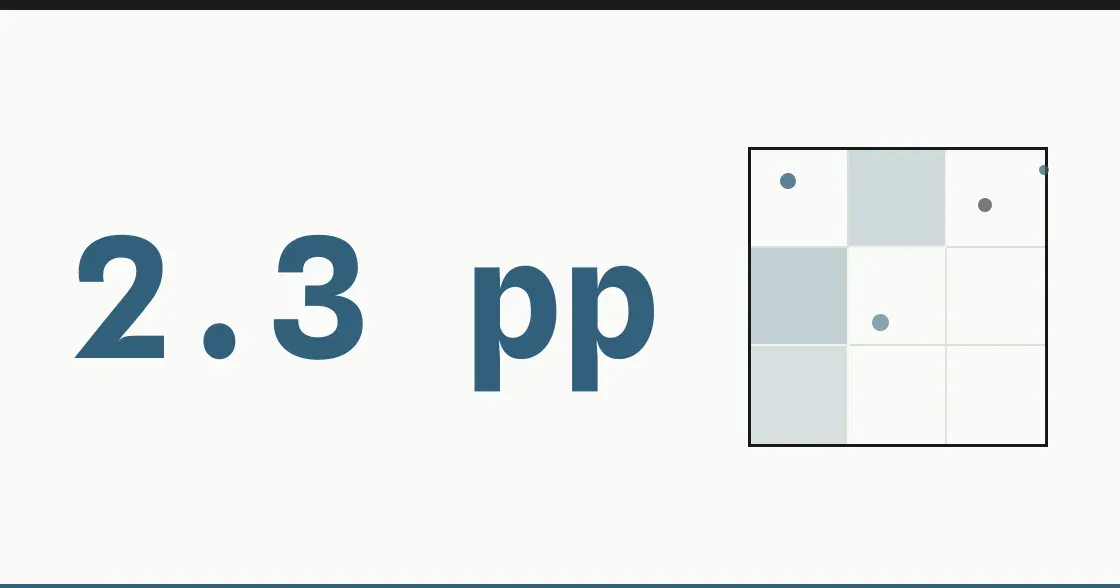
We built the ABS challenge optimizer we promised in July. Two challenges at first pitch are worth about 2.3 points of win probability; the second is worth 60% of the first, so a team with one left is playing a different game than a team with two. The rule is a threshold — challenge when your confidence beats C/(G+C) — and it moves from ~55% sure in a first-inning 0-0 count to ~5% in the bottom of a one-run eighth, one out, tying run on second, 3-2, one challenge left. Measured against it, the league’s mistake is hoarding, not panic (0.57 vs 0.05 points per team-game): three-quarters of team-games end with a challenge unused, and the bar for using one falls in the right direction but too little and too late. Two independent methods, converged within 4% on the headline; team differences are noise, so no leaderboard.
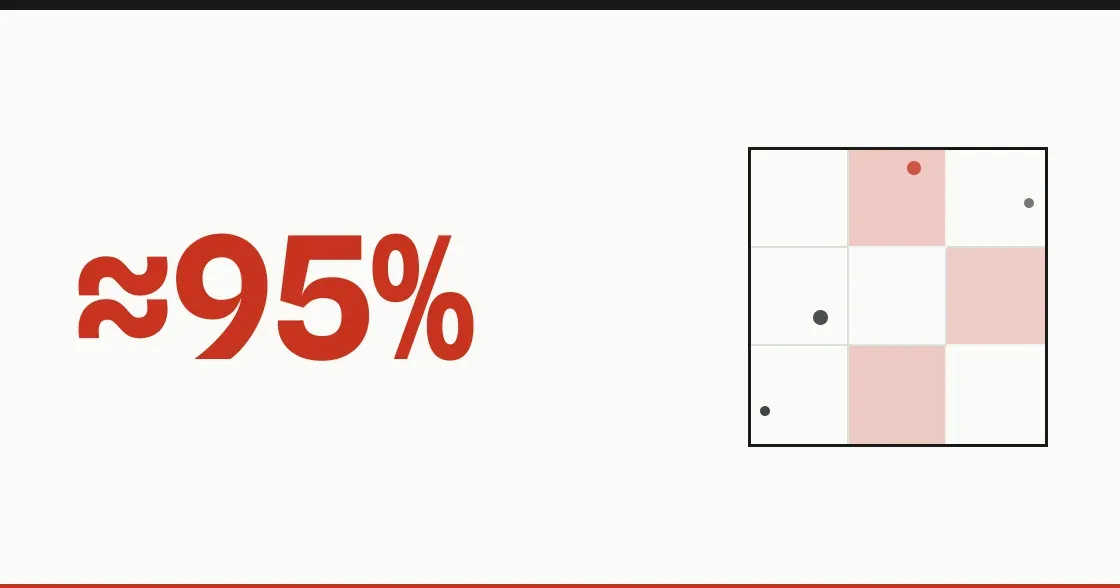
Cal Raleigh’s 2026 collapse — a .394 wOBA to .255 — lives in the ball off the bat: about 95% of the lost run value in a model-based decomposition. What pitchers throw him accounts for roughly none of it (−4% and +6% in two independent estimates, intervals around zero), his swing decisions and miss rate for about −0.7%, and his bat speed is intact (73.1 → 72.5 mph). The pattern is consistent with a centering loss; flush contact fell from about one in seven balls to one in twenty. The one visible change in his swing — soft stuff met about 2.4 inches deeper — was already in place in late August 2025, while he was hitting .475 hard-hit, and it does not explain the loss; the IL did not start it, and the cause is not identifiable from tracking data. “They went upstairs and he’s chasing” is an artifact of the fixed 2026 ABS box. Two model families, cross-verified; sealed lines and endpoints we’ll score in October.
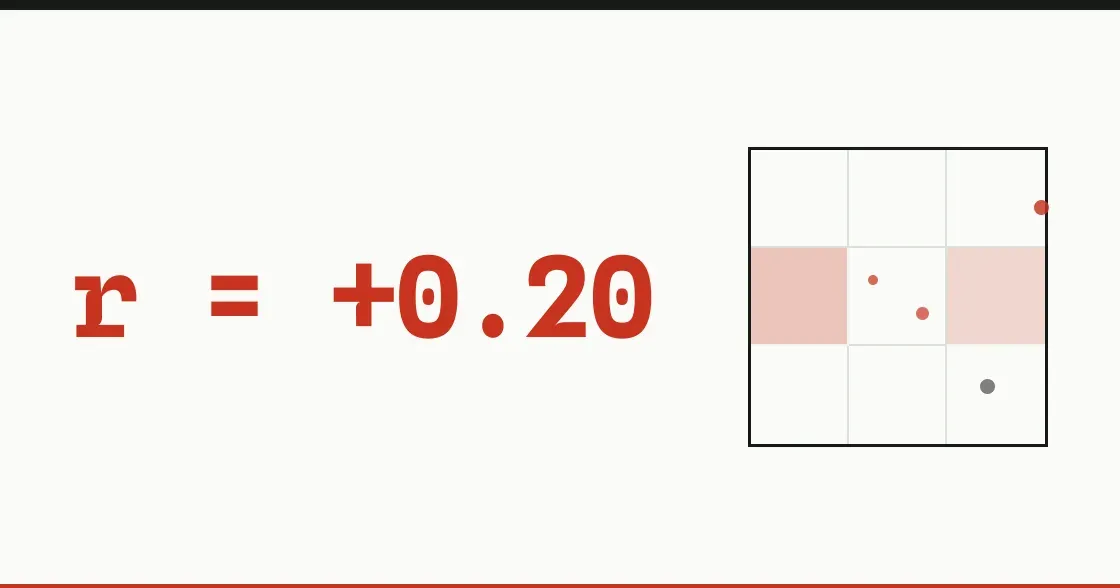
We tried to film the adjustment every broadcast narrates — the league writing its book on a rookie over his first months — and couldn't find it happening. What we found instead: a debutant's first 150 major-league pitches predict the diet he'll see a full season later at least roughly as well as an established hitter's opening week predicts his (+0.43 vs +0.39 — a comparison whose tolerance is wide, so read it as no detectable penalty rather than equality), and whatever the league settles on in those first 150 pitches is mostly still in place in September. Our reading of the 2026 class is that there's no rookie script, only hitter-by-hitter plans; and Kevin McGonigle's class-largest 17.6-point fastball deficit stops being remarkable once you price in the search that found it.